Riding the Rails into the Past

Riding the Rails into the Past
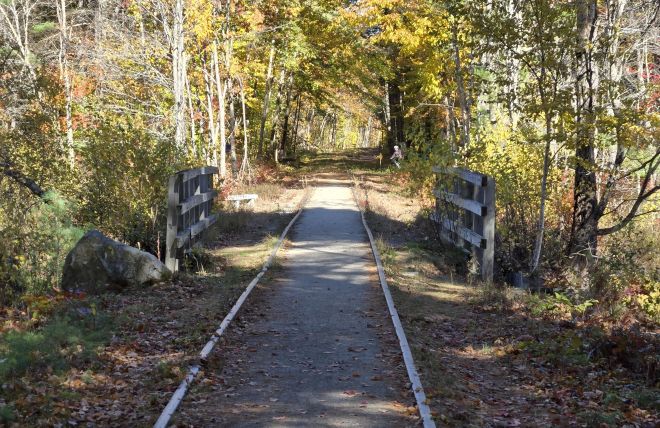
Like many cyclists these days, my wife and I have gotten off the highway in favor of trail riding. Many of these are gravel paths that follow abandoned rail lines through beautiful landscapes, cutting through forests and wetlands. These rides offer sweeping views, wildlife sightings, and a peace and quiet you’ll never find on the highway. And the most surprising byproduct of the rails‑to‑trails movement is the community you find, both on and off the trail. On the trail, it’s rare to meet anyone not wearing a smile, and many are happy to stop, chat, and share. Off the trail, a huge social media network thrives—people trading information about the best views, current conditions, and directions to hidden gems.
But the most interesting thing is the part that isn’t in view—the history. These lines once united rural communities across America. They fueled commerce, culture, growth, and opportunity for millions.
The Cotton Valley Line — Connecting Rural New Hampshire
Long before highways existed, the Cotton Valley line connected Wakefield and Wolfeboro. It gave rural students access to high school. Years ago, I met the Nibblet family—nine children who grew up on a farm in Granite, New Hampshire in the 1920s. Their father worked at the local quarry in addition to farming. When the children graduated from the one‑room schoolhouse in Granite, they walked two miles to the train station in Ossipee Village and rode into Wolfeboro to attend Brewster Academy, along with students from other surrounding rural towns.
In addition to this crucial link to education, the local line provided access to markets and commerce, carried mail, and connected people in isolated communities. It was a lifeline in every sense of the word.
The Northern Line — Now the Northern Rail Trail
When the Northern Railroad opened in Lebanon in 1847, Daniel Webster delivered the dedication speech. He called the new line:
“Altogether new. The world has seen nothing like it before.”
This wasn’t just a local ribbon‑cutting—it was a national moment. Railroads were transforming rural America, and Webster framed the Northern Railroad as a symbol of progress, unity, and economic hope.
During the Civil War era, the Northern Railroad moved troops, supplies, and mail between rural New Hampshire towns and hubs like Concord and Boston. It was part of the infrastructure that kept New England connected during a national crisis.
Today, that same corridor is the Northern Rail Trail, the longest rail trail in New Hampshire. Riders are literally pedaling along a line once celebrated as a technological marvel.
The Boston & Maine Snow Trains to the White Mountains
I’ve met old‑timers with stories of riding the train from Boston to rural New Hampshire inns—places full of colorful characters and horse‑drawn taxis waiting to carry visitors up to their mountain vacation homes.
Between the 1930s and 1950s, the Boston & Maine Railroad ran special “snow trains” that carried thousands of skiers from Boston to towns like Conway, Bartlett, and Lincoln. Many of those corridors are now rail trails.
It’s a perfect example of how rail lines shaped recreation and tourism—and how today’s trails continue that legacy.
The Real Takeaway: Community, Then and Now
The real takeaway from these old rail lines isn’t just the history—it’s the continuity of community they created and still support today. I ride the Cotton Valley Trail often, and it’s one of the happiest places I know. This isn’t the divided America the media portrays, or the doomsday rhetoric coming out of Washington. It’s neighbors, families, and strangers sharing the same path. It’s friendly faces walking, riding, talking, and reconnecting.
These multi‑use trails have become modern gathering places, just as the rail lines once were. In the past, these corridors connected rural towns, carried students to school, brought mail and goods to isolated communities, and tied small towns into the larger world. Today, they connect us in quieter ways—through shared space, shared purpose, and the simple act of being outside together.